Tradition-aware Christian reading
Catholic, Protestant, Orthodox, and comparative study contexts with visible source and canon labels.
Tradition context
Tradition-aware reading needs more than labels.
Tradition context affects which books are shown, how sources are labeled, how comparative study is separated, and where corrections should go.
The language must stay careful. bibleverse can describe source handling and devotional posture without implying Church, parish, diocesan, or denominational endorsement.
Catholic
Catholic context includes deuterocanonical awareness and public-domain source labeling while keeping external review boundaries visible.
Catholic readingProtestant
Protestant context keeps a familiar 66-book reading posture and clear KJV public-domain source labels.
Protestant readingOrthodox and study
Orthodox context names Brenton Septuagint usage and the New Testament KJV fallback; Comparative Study remains a separate research mode.
Orthodox readingWhat to know
Tradition context stays visible while the reading experience remains simple.
Tradition-aware reading is not just a preference switch. It affects book lists, source labels, explanatory notes, and the line between devotional reading and comparative study. Bibleverse keeps those differences visible so readers can notice context without being pushed into a blended or unsupported presentation.
The practical choices stay separate: Catholic, Protestant, and Orthodox and study. From tradition-aware reading, a reader can move to a related feature, source note, privacy note, update list, or support path without guessing where the question belongs.
That matters for readers who care about Catholic, Protestant, Orthodox-oriented, and Comparative Study presentation boundaries. For tradition-aware reading, the answer should be plain enough to act on without treating a signup as access, a reminder as obligation, or app content as a substitute for the right human help.
A visitor may be asking about how bibleverse labels tradition context without pretending all canons or source decisions are identical. Tradition-aware reading should answer that question directly before asking anyone to join a list, send a message, or assume a store link is ready.
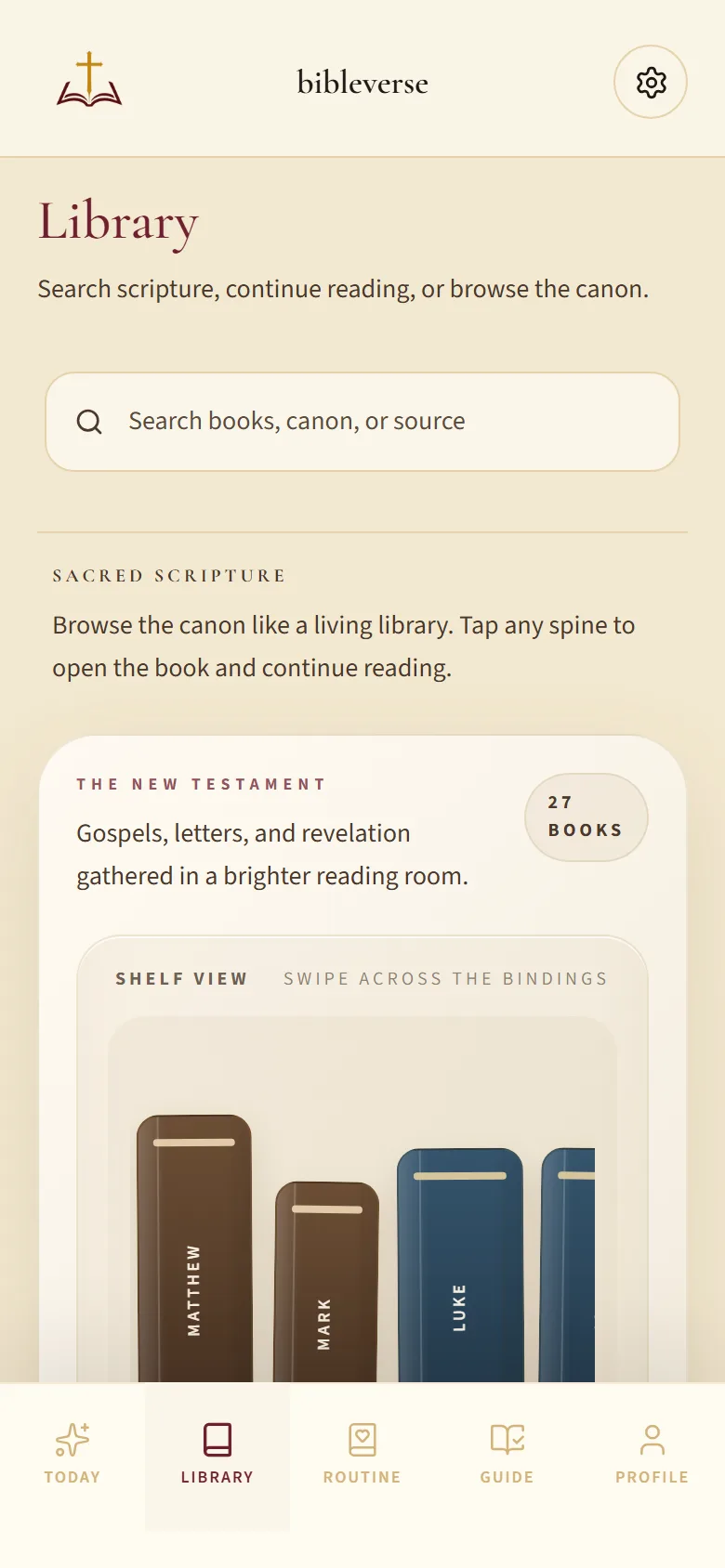
Catholic
bibleverse does not present itself as an official Church, parish, diocesan, or denominational product. It does not replace a Bible, worship, confession, pastoral care, counseling, medical care, legal advice, or emergency support.
- Catholic
- Protestant
- Orthodox and study
How it helps
Compare the tradition pages before choosing a reading context.
Catholic
Catholic context includes deuterocanonical awareness and public-domain source labeling while keeping external review boundaries visible.
Catholic context includes deuterocanonical awareness and public-domain source labeling while keeping external review boundaries visible.
Orthodox and study
Orthodox context names Brenton Septuagint usage and the New Testament KJV fallback; Comparative Study remains a separate research mode.
Protestant context keeps a familiar 66-book reading posture and clear KJV public-domain source labels.
bibleverse does not present itself as an official Church, parish, diocesan, or denominational product. It does not replace a Bible, worship, confession, pastoral care, counseling, medical care, legal advice, or emergency support.
Next
Compare the tradition pages before choosing a reading context.
Protestant
Orthodox and study
Join the beta list.
Bibleverse is in limited beta. Join Android tester interest or get launch updates while public Android launch work continues; iOS is planned later.